


Page 1 of 11
Performers
Wolfgang Amadeus Mozart
,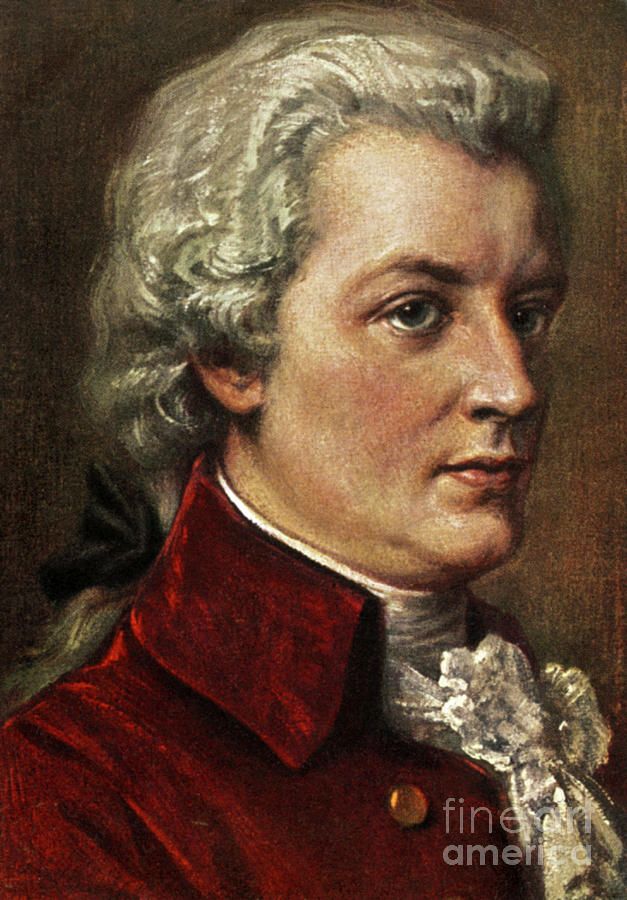
Our list of famous composers opens with the Austrian composer Wolfgang Amadeus Mozart, who created a series of operas, concerts, symphonies and sonatas that profoundly influenced all classical music.
The musician was famous for his hard work. So, once, in five weeks he gave 22 concerts, 5 of which he produced himself. His performances were often sold out, because Mozart himself had a unique connection with the audience, which, according to his biographer Maynard Solomon, "was given the opportunity to witness the transformation and improvement of the main musical genre."
Who knows, Wolfgang would have reached such heights and fame if not for his perseverance, as well as the demanding and purposeful nature of his father, who was engaged in the musical education of his son. Anyway, the key to success in any business is a long-term practice filled with intensive training and classes. But achieving any goal starts with small steps. So, for example, today you can take our course on music literacy to determine for yourself the right vector of movement in the future.
Despite his great popularity and fame, over time Mozart's financial condition began to deteriorate. He began to perform less, and therefore his income fell. Soon he started borrowing money from friends.
The musician gave concerts, trying to restore the financial situation of the family. The two-year period of 1788-1789 was the lowest point for Mozart, during which he experienced depression. Historians believe that the composer may have suffered from bipolar personality disorder, which could explain periods of hysteria combined with bouts of feverish creativity.
For example, after two years of depression, Mozart experienced a period of great musical productivity and personal healing in the next 2 years. He was able to revive his popularity, and his financial situation finally began to improve.
Mozart died on December 5, 1791 at the age of 35 – quite early even for that time. At the time of his death, Mozart was considered one of the greatest composers of all time. His music was a bold expression, often complex and contradictory, and required high technical skill from the performer.
Ludwig van Beethoven
,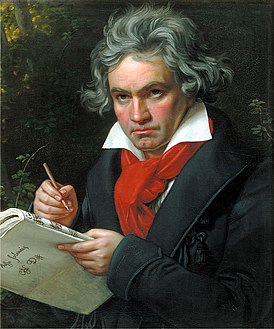
Ludwig van Beethoven (German Ludwig van Beethoven, pronunciation: December 16, 1770, Bonn, Electorate of Cologne, Holy Roman Empire — March 26, 1827, Vienna, Archduchy of Austria, Austrian Empire) was a German composer, pianist and conductor, the last representative of the "Vienna classical School".
Beethoven is a key figure of classical music in the period between classicism and Romanticism, one of the most performed composers in the world. He wrote in all genres that existed in his time, including opera, music for dramatic performances, choral compositions. Instrumental works are considered the most significant in his legacy: piano, violin and cello sonatas, piano concertos, for violin, quartets, overtures, symphonies. Beethoven's work had a significant impact on the symphonism of the XIX and XX centuries.
Johann Sebastian Bach
,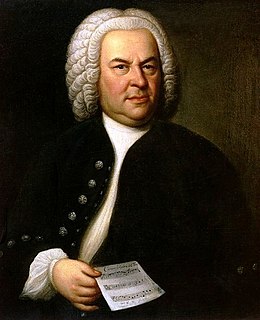
Johann Sebastian Bach was the youngest, eighth child in the family of musician Johann Ambrosius Bach and Maria Elisabeth Lemmerhirt. The Bach family has been known for its musicality since the beginning of the XVI century: many of Johann Sebastian's ancestors and relatives were professional artists and musicians[10]. During this period, the church, local authorities and the aristocracy supported musicians, especially in Thuringia and Saxony. The Bach family was of German origin, the most distant ancestor of the surname Faith Bach was from Thuringia, moved to Hungary, but under the influence of religious persecution of Protestants, begun there in the XVI century., returned to his homeland, since then the Bakhov family has not left the fatherland. Bach's father, Johann Ambrosius, Feit's grandson, lived and worked in Eisenach (Grand Duchy of Saxe-Weimar). At that time, there were about 6,000 residents in the city. The work of Johann Ambrosius included the organization of secular concerts and the performance of church music.
When Johann Sebastian was 9 years old, his mother died, and a year later his father died. The boy was taken in by his older brother, Johann Christoph, who served as an organist in nearby Ohrdruf. Johann Sebastian entered the gymnasium, his brother taught him to play the organ and the clavier. While studying in Ordruf under the guidance of his brother, Bach got acquainted with the works of contemporary South German composers — Pachelbel, Froberger and others. It is also possible that he got acquainted with the works of composers from Northern Germany and France.
At the age of 15, Bach moved to Lüneburg, where in 1700-1703 he studied at the St. Michael's Vocal School. During his studies, he visited Hamburg, the largest city in Germany, as well as Celle (where French music was held in high esteem) and Lubeck, where he had the opportunity to get acquainted with the works of famous musicians of his time. The first works of Bach for organ and clavier belong to the same years. In addition to singing in the choir, Bach probably played the school's three-manual organ and the harpsichord. Here he received his first knowledge of theology, Latin, history, geography and physics, and also, perhaps, began to learn French and Italian. At school, Bach had the opportunity to communicate with the sons of famous North German aristocrats and famous organists, primarily with Georg Boehm in Lüneburg and Reinken in Hamburg. With their help, Johann Sebastian may have gained access to the greatest instruments he has ever played. During this period, Bach expanded his knowledge of the composers of that era, first of all, about Dietrich Buxtehude, whom he greatly respected.
Giuseppe Verdi
,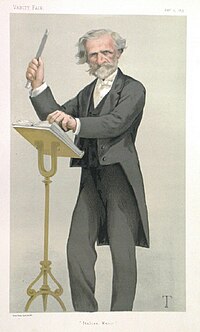
He was born on October 10, 1813 in the village of Le Roncole[it], near Busseto (Duchy of Parma). The composer's father, Carlo Verdi, kept a village inn, and his mother, Luigi Uttini, was a spinner. The family lived poorly, and Giuseppe's childhood was difficult. In the village church he helped to say mass. He studied musical literacy and organ playing with Pietro Baistrocchi. Noticing his son's craving for music, his parents gave Giuseppe a spinet. The composer kept this very imperfect instrument until the end of his life.
The musically gifted boy drew the attention of Antonio Barezzi, a wealthy merchant and music lover from the neighboring town of Busseto. He believed that Verdi would become not an innkeeper and not a village organist, but a great composer. On the advice of Barezzi, ten-year-old Verdi moved to Busseto to study. Thus began a new, even more difficult period of life — the years of adolescence and youth. On Sundays, Giuseppe went to Le Roncole, where he played the organ during mass. Verdi also had a composition teacher, Fernando Provesi, director of the Busseto Philharmonic Society. Provesi was engaged not only in counterpoint, he awakened in Verdi a craving for serious reading. Giuseppe's attention is attracted by the classics of world literature — Shakespeare, Dante, Goethe, Schiller. One of his most favorite works is the novel "The Betrothed" by the great Italian writer Alessandro Manzoni.In Milan, where Verdi went at the age of eighteen to continue his education, he was not accepted to the Conservatory (today bearing Verdi's name) "because of the low level of piano playing; in addition, there were age restrictions at the conservatory." Verdi began taking private lessons in counterpoint, attending opera performances at the same time, as well as concerts. Communication with the Milan beau monde convinced him to seriously think about a career as a theater composer.
Returning to Busseto, with the support of Antonio Barezzi, Verdi gave his first public performance at the house of Barezzi in 1830.
Fascinated by Verdi's musical gift, Barezzi offers him to become a music teacher for his daughter Margarita. Soon the young people fell in love with each other and on May 4, 1836, Verdi married Margarita Barezzi. Soon Margarita gave birth to two children: Virginia Maria Luisa (March 26, 1837 — August 12, 1838) and Icilio Romano (July 11, 1838 — October 22, 1839). While Verdi was working on his first opera, both children died in infancy. Some time later (June 18, 1840), at the age of 26, the composer's wife Margarita died of encephalitis.
The first production of Verdi's opera ("Oberto, Count Bonifaccio") (Oberto) at La Scala in Milan was critically acclaimed, after which the theater's impresario, Bartolomeo Merelli, offered Verdi a contract to write two operas. They became "The King for an hour" (Un giorno di regno) and "Nabucco" ("Nebuchadnezzar"). Verdi's wife and two children died while he was working on the first of these two operas. After its failure, the composer wanted to stop writing opera music. However, the premiere of Nabucco on March 9, 1842 at La Scala was accompanied by great success and established Verdi's reputation as an opera composer. Over the next year, the opera was staged in Europe 65 times and since then has occupied a strong place in the repertoire of the world's leading opera houses. Nabucco was followed by several operas at once, including "Lombards on Crusade" (I Lombardi alla prima crociata) and "Ernani" (Ernani), which were staged and had success in Italy.
In 1847, the opera "Lombards", rewritten and renamed "Jerusalem" (Jerusalem), was staged by the Paris Opera on November 26, 1847, becoming Verdi's first work in the grand opera style. To do this, the composer had to rework this opera somewhat and replace the Italian characters with French ones.
Pyotr Tchaikovsky
,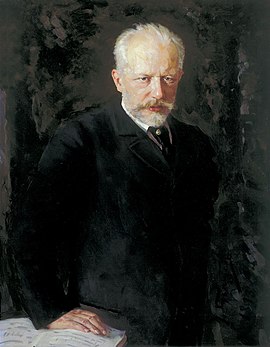
Pyotr Ilyich Tchaikovsky (April 25 [May 7] 1840, village Votkinsk, Vyatka Province — October 25 [November 6] 1893, Saint Petersburg) was a Russian composer, teacher, conductor and music critic.
Tchaikovsky 's legacy is represented by different genres: these are ten operas, three ballets, seven symphonies (six numbered and the Manfred Symphony), 104 romances, a number of program symphonic works, concerts and chamber-instrumental ensembles, choral compositions, cantatas, piano miniatures and piano cycles. His work represents an extremely valuable contribution to the world musical culture and, along with the work of his contemporaries — the composers of the Mighty Bunch, marks a new stage in the development of Russian music.
Tchaikovsky is one of the greatest composers in the world, a prominent representative of musical romanticism and one of the outstanding lyricists and playwrights-psychologists in music, who delved into the psychological analysis of complex and contradictory phenomena of life.
Mikhail Glinka
,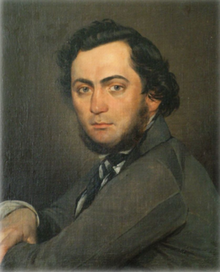
Mikhail Glinka was born on May 20 (June 1), 1804 in the village of Novospassky, Smolensk province, on the estate of his father, retired captain Ivan Nikolaevich Glinka (1777-1834). His mother was his father's second cousin, Evgenia Andreevna Glinka—Zemelka (1783-1851). The composer's great—grandfather was a nobleman from the Glinka family of the coat of arms of Tshaska - Victorin Vladislav Glinka (Polish. Wiktoryn Władysław Glinka). After the loss of Smolensk by the Polish-Lithuanian Commonwealth in 1654, V. V. Glinka accepted Russian citizenship and converted to Orthodoxy. The tsarist government retained the Smolensk gentry's land holdings and noble privileges, including the former coats of arms.
Until the age of six, Mikhail was brought up by his paternal grandmother Fekla Alexandrovna, who completely removed his mother from the upbringing of his son. He grew up a nervous, suspicious and sickly child -a touchy—feely "mimosa", according to Glinka's own characteristic. After the death of Fekla Alexandrovna, Mikhail again passed into the full disposal of his mother, who made every effort to erase the traces of his former upbringing. At the age of ten, he began to study piano and violin; his first teacher was a governess invited from St. Petersburg, Varvara Fedorovna Klammer.
In 1817, Mikhail's parents brought him to St. Petersburg and placed him in a Noble boarding school at the Main Pedagogical Institute (in 1819 renamed the Noble Boarding School at St. Petersburg University), where his tutor was the poet, Decembrist V. K. Kyukhelbeker, whose sister Justina (1784-1871) married G. A. Glinka (1776-1818) — the cousin of the composer's father.
In St. Petersburg, Mikhail took private lessons from prominent music teachers, including Carl Zeiner and John Field. In 1822, he successfully (as a second student) graduated from the Noble Boarding School at the Imperial St. Petersburg University. At the boarding school, he met A. S. Pushkin, who came there to visit his younger brother Lev, a classmate of Mikhail.
Richard Wagner
,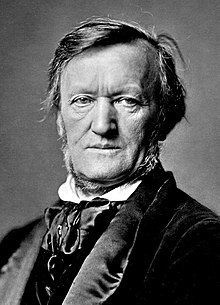
Wilhelm Richard Wagner (German: Wilhelm Richard Wagner, pronunciation: May 22, 1813, Leipzig — February 13, 1883, Venice) was a German composer and conductor. The greatest reformer of opera, who had a significant impact on European musical culture, especially German, especially on the development of opera and symphonic genres.
Wagner's mysticism and ideologically tinged anti-Semitism influenced German nationalism at the beginning of the 20th century, and later on National Socialism, which surrounded his work with a cult, which in some countries (especially in Israel) caused an "anti-Wagner" reaction after World War II.
Unlike most opera composers, Wagner wrote both the libretto and the music for each of his stage works. Having established his reputation as a composer of works in the romantic spirit of Karl Maria von Weber and Giacomo Meyerbeer, Wagner revolutionized opera through his concept of a total work of art (German: Gesamtkunstwerk), in which he sought to synthesize poetic, visual, musical and dramatic art, with music being auxiliary to drama. He described this vision in a series of essays published between 1849 and 1852. Wagner realized these ideas most fully in the first half of the four-opera cycle "The Ring of the Nibelung" (German. Der Ring des Nibelungen). His compositions, especially of the late period, are distinguished by complex textures, rich harmonies and orchestration, as well as careful use of leitmotives — musical phrases associated with individual characters, places, ideas or plot elements. His achievements in the field of musical language, such as extreme chromaticism and rapid change of tonal centers, had a great influence on the development of classical music. His "Tristan and Isolde" (German. Tristan und Isolde) is sometimes called the beginning of modernist music.
Wagner built his own opera house (German: Bayreuther Festspielhaus), which embodied many new design features. The premiere of "The Ring" and "Parsifal" took place here, and his most significant stage works continue to be performed at the annual Bayreuth Festival, which is led by his descendants. His views on the relative contribution of music and drama to opera changed in the later period, and he reintroduced some traditional forms in his recent stage works, including The Nuremberg Meistersingers (German. Die Meistersinger von Nürnberg).
Until recent years, Wagner's life was characterized by political exile, violent love affairs, poverty and repeated flight from his creditors. His controversial writings on music, drama and politics have caused a lot of comments — especially since the end of the XX century, when they expressed anti-Semitic sentiments. The influence of his ideas can be traced in many forms of art throughout the 20th century; his influence extended not only to composition, but also to conducting, philosophy, literature, fine arts and theater.
Ludovico Einaudi
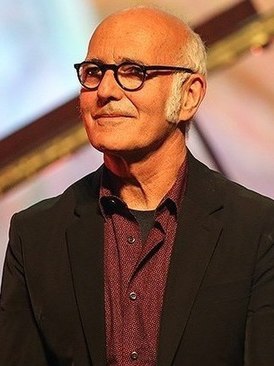
Ludovico Einaudi (ital. Ludovico Einaudi; b. November 23, 1955, Turin, Italy) is an Italian composer and pianist. He studied at the Giuseppe Verdi Conservatory in Milan, as well as with the composer Luciano Berio. He began his career as a classical composer, soon adding other styles to his works, including pop and rock music, ethnic and folk music. Einaudi also often used the ambient style in his music. His music is often meditative and introspective, with a focus on minimalism and modern pop music.
He has composed music for such films as "1+1" and "I'm Still Here", the television miniseries "Doctor Zhivago" (2002) and Acquario (1996). For Acquario, he received the Grolla d'oro[it] award in the nomination "Best Soundtrack". He has released several albums with works for piano and orchestra. He recorded a track with Adriano Celentano in 2007 for the actor's fortieth anniversary album.In the mid-1990s, Einaudi used his unique style to compose music for films. He started with two films by Michele Sordillo (ital. Michele Sordillo): Da qualche parte in città (1994) and Acquario (1996), received the Grolla d'Oro Award for the soundtrack to the latter. In 1998 he wrote the soundtrack to Treno di Panna[it], and in the same year the score to Giorni dispari by Dominic Tambasco (Italian. Dominick Tambasco).
In 2000, Einaudi collaborated with Antonello Grimaldi on the film Un delitto impossibile, he also wrote the soundtrack for the film Fuori dal mondo, which was nominated for an Oscar and for which he received the Echo Klassik Award in Germany in 2002. After the release of Einaudi's debut album, some fragments of it were included in the film Aprile (ital. Aprile) Nanni Moretti[3][13]. In 2002, his soundtrack to The Light of My Eyes (ital. Luce dei miei occhi) was named the best soundtrack of the year at the Italian Music Awards.
In the same year 2002, he received the Italian award for the Best Score (Best Film Score) for the film The Light of My Eyes (ital. Luce dei miei occhi)[6]. And Allmusic magazine highly appreciated the score for the mini-series "Doctor Zhivago", giving a bright review and rating of 4.5 out of 5 stars, comparing Einaudi with Maurice Jarre, the author of the score of the previous film adaptation of the novel[.In 2004, his soundtrack to the film "Strange Crime" won the prize for best film music at the Avignon Film Festival.
In 2010, Einaudi wrote the music for the trailer for the movie "Black Swan". Since then, he has not only composed film soundtracks himself, but his music has also been used as a soundtrack. His music Due Tramonti was used in the film "I'm still here" (2010) directed by Casey Affleck; the work of Nuvole Bianche was used in the film "Astral" (2010) directed by James Wan, in the British TV drama "This is England 86" and in the TV series "Derek [en]" (2012) directed by and starring Ricky Gervais. For "1+1" (2011), the highest-grossing film in the history of France, Einaudi's tracks such as "Fly", "Writing Poems", "L'origine nascosta", "Cache-cache", "Una Mattina" and "Primavera" were used. In the film "This is England" such works as "Fuori Dal Mondo", "Ritornare" and "Dietro casa" are used. The British television series "This is England 88" also included the tracks "Fuori Dalla Notte", "Solo" (a bonus track from the album Nightbook), "Berlin Song" and "Distacco". In 2020, his music was used in the films "Nomadland" and "The Father".
Hans Zimmer
,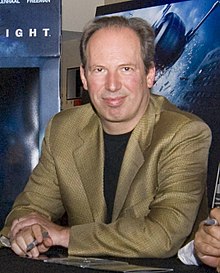
Hans Zimmer was born in Frankfurt am Main to a Jewish family. As a teenager, he moved to the UK, where he graduated from the private school Hurtwood House. Explaining the reasons for moving to the UK on German television, the composer said: My father died when I was still a child, and I somehow gradually escaped to music, which became my best friend
He began his musical career playing keyboards and synthesizers in the bands Helden (with Warren Kahn of Ultravox) and The Buggles (single "Video Killed the Radio Star"). In the 1980s, he worked with film composer Stanley Myers; they co-wrote music for such films as "Moonlight" (1982), "Nothingness" (1985), "My Beautiful Laundry" (1985). His first major achievement is considered to be in 1988, when the main musical theme of the film "Rain Man" written by him was nominated for the Academy Award of the American Academy of Motion Picture Arts "Oscar".
From that moment, Zimmer began writing music for high-budget films: "Mission Impossible 2", "Crimson Tide", "The Rock", "True Love", "Gladiator", "Miss Daisy's Chauffeur", "Prince of Egypt", "Pearl Harbor", "Thin Red Line", "Black Hawk", "Madagascar", "Madagascar 2", "The Da Vinci Code" and soundtracks "Pirates of the Caribbean: Dead Man's Chest", "Pirates of the Caribbean: At the End of the World", "Batman: The Beginning", "The Dark Knight", "The Beginning" "Interstellar". In 1995, he was awarded the Academy Award in the nomination "Best Music" (cartoon "The Lion King").
At the premiere of the film "The Dark Knight".
Together with him, composers Steve Jablonski, James Dooley, Lorne Balfe and Jeff Zanelli work in his studio "Remote Control Productions" (formerly known as "Media Ventures"). The most famous natives of "Remote Control Productions" are composers Harry Gregson-Williams (Metal Gear Solid 2, Metal Gear Solid 3, Metal Gear Solid 4, Call of Duty 4: Modern Warfare, "The Lion, the Witch and the Wardrobe", "Prince of Persia: The Sands of Time"), Mark Mancina ("Brother Bear"), John Powell ("Ice Age 2") and Klaus Badelt ("Ultraviolet", Pirates of the Caribbean: The Curse of the Black Pearl).
On December 8, 2010, Hans Zimmer was awarded a star on the famous Walk of Fame in Hollywood[7].
Since 2010, he has been writing music for the program "Through the Wormhole" with Morgan Freeman.
In the list of "100 geniuses of our time" compiled by The Daily Telegraph, Hans Zimmer ranks 72nd.
In 2011, the prestigious awards of the "World Academy of Soundtracks" were presented in the German city of Cologne, where Zimmer received the prize for the best soundtrack of the year for the film "The Beginning" [9].
The author of the music for the 2018 FIFA World Cup screensaver.
In 2022, Hans Zimmer won the Golden Globe and Oscar Awards for the music he wrote for the film Dune.
On March 15, 2022, the composer began his tour of Europe together with 10 representatives of the Odessa Opera House Orchestra, whom the artist's team helped to leave Ukraine during Russia's invasion of Ukraine. During the concert, a composition dedicated to Ukrainian women was performed, and the Ukrainian flag and photos of women serving in the Armed Forces of Ukraine were broadcast on the screen.
Zimmer lives in Los Angeles with his wife Suzanne and four children.
Elton John
,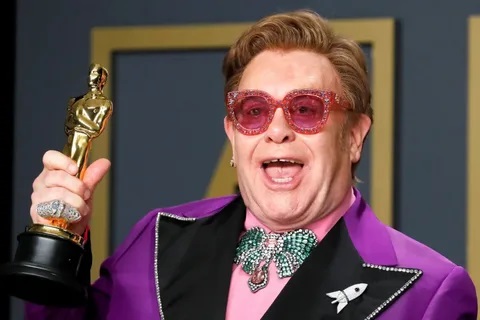
Sir Elton Hercules John (Eng. Elton Hercules John; birth name — Reginald Kenneth Dwight (Eng. Reginald Kenneth Dwight); b. March 25, 1947, Pinner, Middlesex, England, United Kingdom) is a British singer, pianist and composer.
He had a noticeable influence on the development of light rock. One of the most commercially successful artists of the 1970s and one of the most successful UK rock artists. Throughout his career, he has sold more albums in the US and UK than any other British solo artist.
He has worked with songwriter Bernie Taupin since 1967; they have collaborated on more than 30 albums. Over the course of his 50-year career, Elton John has sold more than 300 million records, making him one of the best-selling music artists. He has more than fifty top 40 hits on the UK Singles chart and the Billboard Hot 100, including nine number-ones in the UK and nine in the US, as well as seven consecutive number-one albums in the US and seven more of his albums ranked first on the Billboard 200, 40 singles were in the US Top 40, 28 hit the the top ten and nine rose to first place. Elton John's 52 singles were in the UK Top 40. His single "Candle in the Wind 1997" (a new version of "Candle in the Wind[en]" 1973), rewritten in honor of Diana, Princess of Wales, has sold over 33 million copies worldwide, and is the best-selling single in the history of the UK and US charts. He also produced recordings and occasionally acted in films. From 1976 to 1987 and from 1997 to 2002, Elton John owned the English football club Watford. He is the honorary life president of the club.
Growing up in the Pinner area of London, Elton John learned to play the piano at an early age, and by 1962 had formed Bluesology, an R&B band in which he played until 1967. He met his longtime musical partner Bernie Taupin in 1967, after they both answered an ad for songwriters. For two years they wrote songs for artists including Lulu, and John worked as a session musician for artists including Hollis and Scaffold. In 1969, John's debut album Empty Sky was released. In 1970, his first hit single Your Song from his second album Elton John entered the top ten in the UK and the USA. Elton John also had success in musical films and theater, the 1994 cartoon "The Lion King" and its theatrical adaptation, "Aida" and "Billy Elliot (musical)".
Elton John has five Grammy Awards, five Brit Awards, two Academy Awards, two Golden Globe Awards, a Tony Award, a Disney Legends Award and a Kennedy Center Award. In 2004, he was ranked 49th in the list of the greatest performers by Rolling Stone magazine. In 2013, Billboard magazine named him the most successful solo artist on the list of the best artists of all time on the Billboard Hot 100 and third overall after the Beatles and Madonna. He was inducted into the Rock and Roll Hall of Fame in 1994 and the Songwriters Hall of Fame in 1992, and is a member of the British Academy of Composers and Authors. He was knighted by Queen Elizabeth II for "services to music and charitable services" in 1998. Elton John has performed at several royal events, such as the funeral of Princess Diana at Westminster Abbey in 1997, the British musical concert in honor of the Golden Jubilee of Elizabeth II "Party at the Palace" in 2002 and the concert in honor of the Queen's Diamond Jubilee at Buckingham Palace in 2012.
Elton John is also known as a public figure, in particular, in the field of the fight against the AIDS epidemic that he started in the late 1980s. In 1992, he founded the Elton John AIDS Foundation, and a year later he organized the annual AIDS Foundation party, which became one of the most prestigious Oscar parties in the Hollywood film industry. Since its foundation, the foundation has raised more than 300 million pounds. Elton John's farewell tour, which took place in 2018-2023, became the highest-grossing concert tour in history.
----------------------------------------------------------------------------------------------------------------------------------------------------------------